The impact of Brexit on the retail industry: the return challenges
British retailers are facing mounting challenges when exporting goods to the EU, particularly as a result of UKCA marking requirements and rules of origin. Beyond outbound flows, however, the return of goods across the Channel is also emerging as a significant logistical and financial constraint.
Each time goods cross a border, customs authorities may levy taxes. Since Brexit, when those same products are sent back to the UK, they are often treated as new imports unless retailers can demonstrate that the goods were originally exported (source Internet Retailing)
This creates structural inefficiencies, including the risk of double duties, duplicated administrative processes, and a deterioration in the overall customer experience.
As a result, many UK retailers are scaling back or abandoning EU sales altogether, citing their inability to guarantee smooth and predictable returns, according to Internet Retailing, a media outlet specialising in online and multichannel retail. Its analysis shows that UK footwear and clothing exports to the EU have declined by more than 60%, falling from £7.4 billion in 2019 to £2.7 billion in 2023.
Against the backdrop of multiple post-Brexit regulatory constraints, return management has therefore become a barrier to growth for British retailers.
🔎 Discover rules of origins, the other measure affecting the Retail industry.
How does the return policy take shape concretely?
Returns are a structural feature of modern retail: customers expect them, particularly in fashion and e-commerce. A study was conducted by Statista in 2022 (a global data and business intelligence platform), and it shows that 71% of UK online shoppers return items at least occasionally.
But post-Brexit, what used to be a quick process, now involves layers of customs declarations, VAT reclaims, and proof-of-origin documents.
Large retail groups have been able to adjust their operating models accordingly. For UK SMEs, by contrast, these requirements often translate into disproportionate complexity and cost, as many lack the internal capabilities to manage the administrative workload.
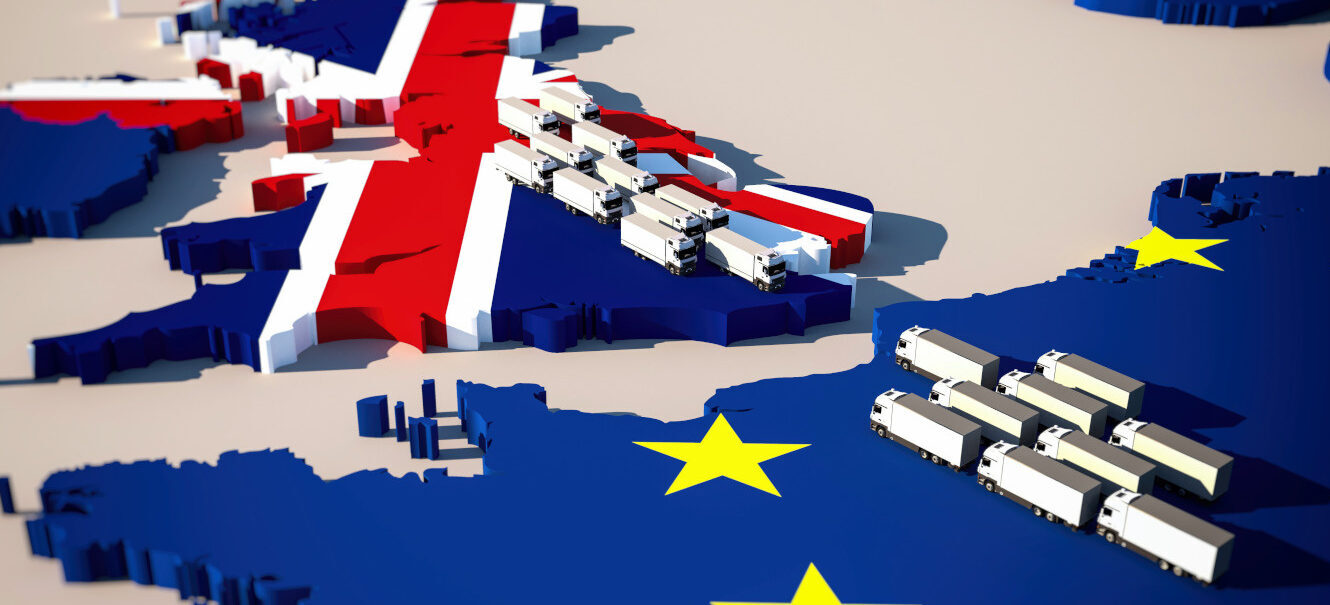
In practical terms, a routine return can trigger avoidable charges and delays. For instance, if a customer in Paris returns a pair of shoes due to sizing issues. When the parcel re-enters the UK, French customs may levy duties on the outbound leg, and UK authorities can treat the return as a fresh import unless the retailer can substantiate the goods’ original export, creating avoidable cost, delay, and administrative friction.
Retailers typically refund customers regardless, but the associated taxes and fees can materially compress margins. At scale, across hundreds of returns, profitability can deteriorate rapidly.
Returns are estimated to cost UK retailers approximately £60bn annually (source: Locate2u). In response, some brands have exited EU markets altogether, not due to a strategic shift in demand, but because operational complexity has become a binding constraint.
So far, these challenges are not expected to change soon, and the British government recommends assiduous tracking of your goods to avoid being considered new import.
Recommendations for your return policy and how to turn Brexit red tape to return your goods into opportunity?
Option 1: optimising your returns through clear processes
Brexit has materially altered the regulatory framework, but it has not eliminated the underlying commercial opportunity in the EU market. With an appropriate operating model and supporting infrastructure, UK retailers can restore a more efficient and scalable cross-border setup.
In practice, this requires targeted investment in customs expertise, robust data and shipment traceability, and local partnerships that reduce friction and improve compliance execution. When documentation is standardised, processes are automated, and an EU-based presence is leveraged where relevant, returns can be managed more predictably and with a lower risk of adverse tax treatment. That said, these improvements typically imply additional fixed costs and implementation effort, which must be weighed against expected EU revenue and margin upside.
Option 2: having a base on EU soil to overcome return challenges
Establishing an operational base within the EU can materially reduce return-related friction by limiting the need to move goods back to the UK, thereby mitigating additional customs procedures and associated costs.
A relevant illustration is the British company Very Displays, a retail business specialising in portable display solutions for trade events. The company opted to locate part of its operations in Northern France, the closest EU neighbour to the UK. Given that a significant share of its customer base is in France, relocating closer to end clients improved service proximity while reducing the cost and complexity linked to exporting goods from the UK. Lille was selected as a hub due to its connectivity and strategic positioning, notably its proximity to London, Paris and Belgium.
European solution for the retail industry: the UK Business Centre Lille
At the UK Business Centre Lille supports UK retailers and e-commerce brands rebuild their European access. With more than 150 companies supported, our network of experts offers tailored support from logistics optimisation to subsidiary creation, providing the tools and partners to trade confidently across borders.
“The UK Business Centre Lille has been absolutely fantastic, connecting us with people that I never would have had the ability to connect with before (…) It helped us tremendously and gave us real peace of mind” – Simon Boswell, Managing and Finance Director at Very Displays
🔍 Discover the full Very Displays’ full experience with the UK Business Centre Lille
Here’s how we can help your retail company:
- Set up a local base in Northern France, to send your goods across Europe
- Implement customs and VAT strategies to prevent double duties.
- Connect with our ecosystem of experts, from legal advisors to warehousing.
Because the issue isn’t that your customers want to return products, it’s that your business needs tailored solution.

Do you want to access the EU market more easily?

Discover our latest news

10 years after Brexit: what has changed for UK businesses?
James Hutton Limited interview: what Scottish plant science companies need to grow in France